


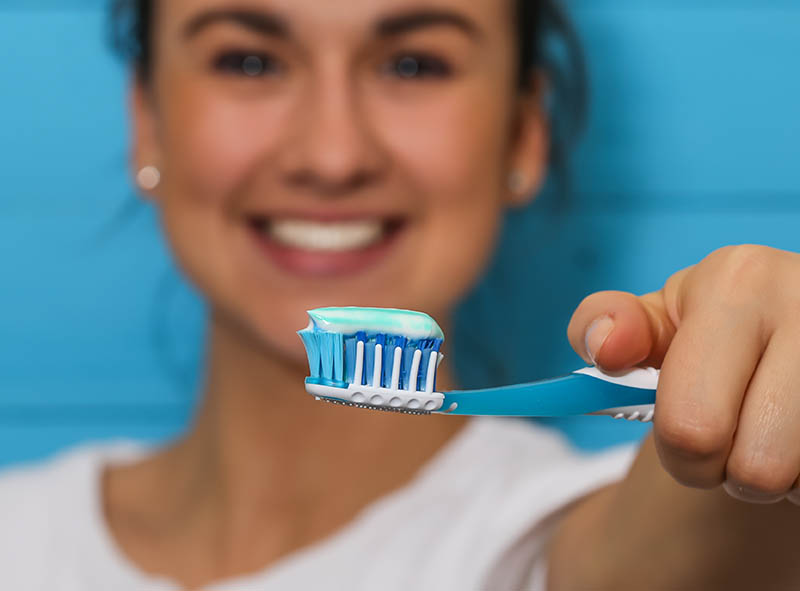
These days people are being more & more conscious of what’s in the food they eat & the products they buy. But do you know what your toothpaste is made of? The answer is there are many different compounds that make up toothpaste. Modern toothpaste is truly a marvel of modern science that can remove stains & prevent tooth decay.
The official name for toothpaste is dentrifice, which means any substance intended to remove debris from teeth in order to prevent tooth decay. Dentrifice used to include both tooth powders & toothpastes, until the invention of the toothpaste tube made pre-mixed pastes much more popular because they were more convenient. Dentrifice is still the French word for toothpaste, though it hasn’t been used in English since around the turn of the 20th century.
All toothpastes have at least two key components: abrasives & surfactants. Abrasives are rough materials that aid the toothbrush in scrubbing debris such as plaque, tartar & food particles from teeth. Perhaps the most well-known toothpaste abrasive is sodium bicarbonate, or baking soda. Other abrasives include aluminum hydroxide, calcium carbonate, calcium phosphate, & silicas.
Abrasives also polish teeth so they’re shiny & smooth, but using them too roughly can actually damage teeth by stripping away enamel, which makes teeth more vulnerable to tooth decay. That’s why it’s better to use a soft-bristled toothbrush than a hard bristle one, & to brush thoroughly, not hard.
Surfactants are compounds that help toothpaste get nice & foamy. This lathering effect has a real purpose: it helps evenly distribute the abrasives & other components, such as fluoride. While your dentist & the American Dental Association recommends toothpastes with fluoride for most people, there are fluoride free varities for those with a fluoride sensitivity. Fluoride is a natural mineral that helps prevent tooth decay & can even remineralize degraded tooth enamel.
Other inactive ingredients found in toothpaste include water (which can account for nearly 40% of what’s in the tube) & chemicals to keep the paste from drying out, such as propylene glycol & glycerol. Some pastes also include anti-bacterial agents that can help eliminate the bacteria that cause gum disease. Specialized toothpastes, such as whitening or anti-sensitivity, may contain other compounds that contribute to their particular purpose.
If you’re ever feeling overwhelmed by the choices in the toothpaste aisle, feel free to talk to our dental care team about which toothpaste is right for you.